Paper Radar
An interactive survey of ~2,000 papers, organized by topic and continuously updated before and after the tutorial. A single running example evolves across all sessions, and live polls let attendees predict benchmark results before the reveal.
More related surveys & courses. Browse our continuously growing collection of surveys, reading lists, and short courses on factuality, RAG, and agents — all curated and kept current at papers.lunadong.com.
Schedule · 3.5 Hours
- 1.1 Introduction
- 1.2 Factuality Overview
- 1.3 RAG Benchmarks & State-of-the-art
RAG Deep Dive
- 2.1.0 Overview5 min
- 2.1.1 RAG Triggering8 min
- 2.1.2 Query Rewriting8 min
- 2.1.3 Retrieval8 min
- 2.1.4 Post-processing10 min
- 2.1.5 Answer Generation11 min
Speakers
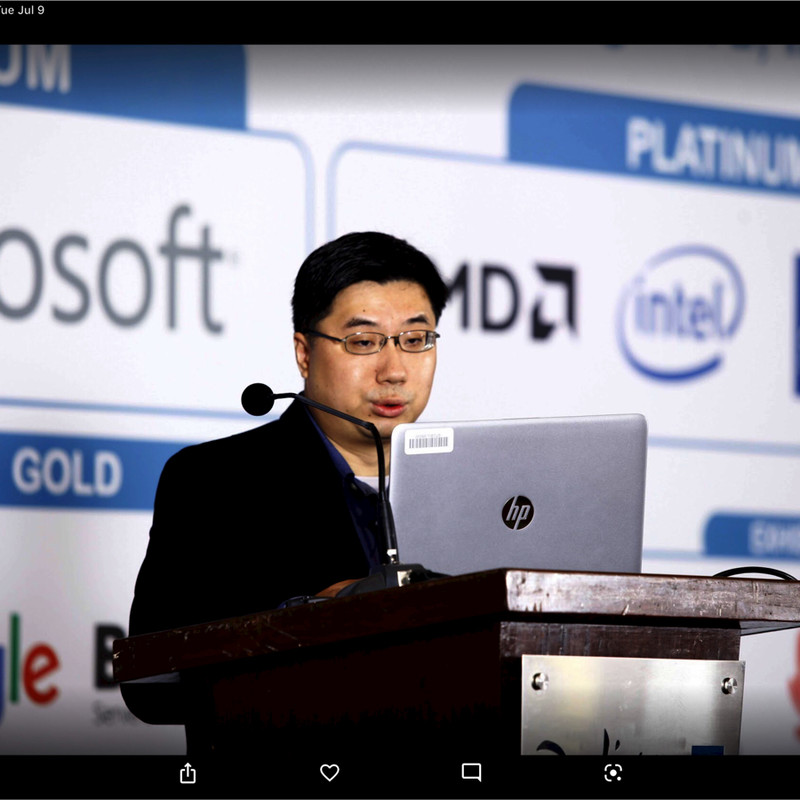
Early inventors of RAG, active researchers, and industry practitioners — also the organizing team behind KDD Cup 2024 (CRAG) and 2025 (CRAG-MM).







More about the tutorial
Abstract
Despite well-known hallucination issues, LLMs have become an increasingly indispensable source of information, and the underlying technology has advanced rapidly to make their answers far more reliable.
Early on, Retrieval-Augmented Generation (RAG) emerged as the dominant remedy, grounding LLM responses in external knowledge and evolving from simple retrieve-then-read pipelines into modular, graph-enhanced, and agentic systems. More recently, Agentic Deep Research has pushed the frontier further, equipping LLMs with autonomous planning, multi-hop investigation, and iterative synthesis to tackle open-ended questions that no single retrieval pass can answer.
This tutorial offers an in-depth treatment of modern RAG and Deep Research, grounded in an AI-assisted systematic analysis of 2,000+ recent papers (2020–2026). Attendees will leave with a structured roadmap, evidence-backed practical recommendations, and a clear map of open research opportunities.
Running Examples
A single question grows across the tutorial — from a simple lookup to an open-ended research task — each technique visibly improving on the last. We follow one running electric-vehicle example across the full range of question types:
Who Should Attend
Researchers
In NLP, data mining, and knowledge management seeking a structured map of the RAG landscape and its open problems.
Applied Scientists & Engineers
Building production LLM systems who need evidence-backed guidelines for choosing RAG architectures.
Graduate Students
Entering the field, wanting a comprehensive entry point to 2K+ papers organized by topic and timeline.
Prerequisites. Familiarity with basic LLM concepts (pre-training, fine-tuning, prompting). No prior knowledge of RAG or hallucination detection is assumed.
Reading List
★ denotes recommended pre-reading. The complete ~2,000-paper list lives in the online companion.
- ★ Lewis et al. (2020) — the original paper introducing RAG for knowledge-intensive NLP tasks.
- ★ Gao et al. (2024) — a comprehensive survey of RAG for LLMs (architecture taxonomy & evaluation).
- ★ Huang et al. (2023) — a survey on hallucination in LLMs, motivating the need for RAG.
- Guu et al. (2020) — REALM: retrieval-augmented language model pre-training.
- Asai et al. (2023) — Self-RAG: learning to retrieve, generate, and critique via self-reflection.
- Jiang et al. (2023) — FLARE: active retrieval-augmented generation with adaptive triggering.
- Edge et al. (2024) — GraphRAG: a graph-based approach to query-focused summarization.
- Jin et al. (2025) — Search-R1: training LLMs to reason and use search engines with RL.
- Yang et al. (2024) — CRAG: a comprehensive benchmark for end-to-end RAG systems.
- Ni et al. (2025) — a recent survey on trustworthy RAG (robustness & reliability).